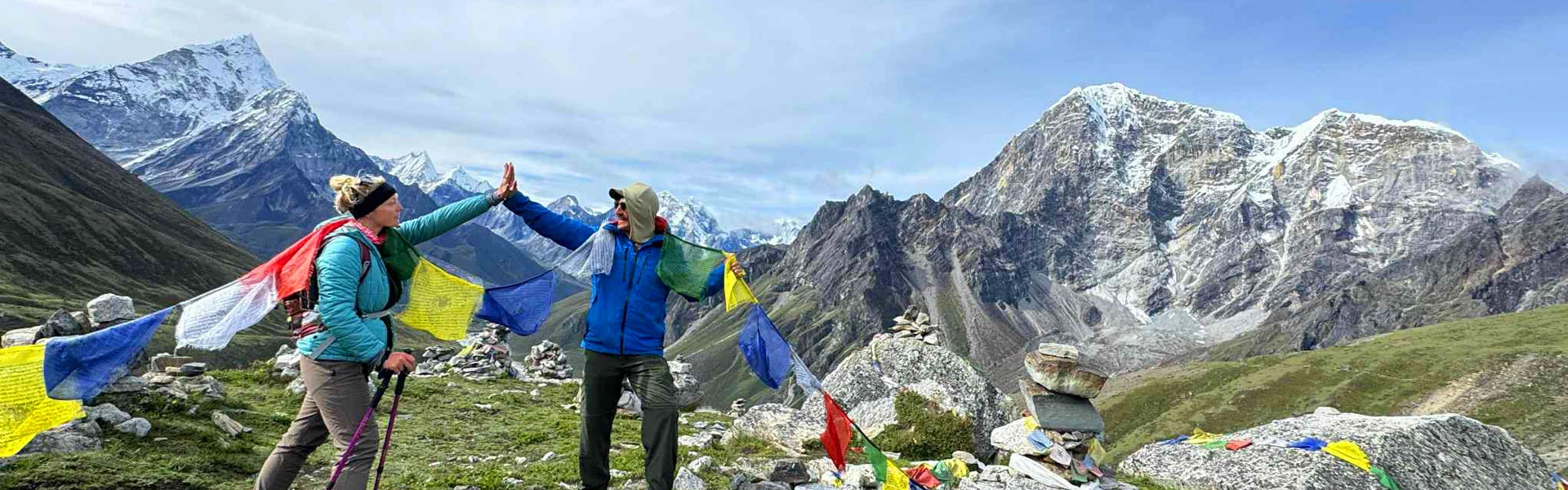
The Classic 14-Day Everest Base Camp Trek is the perfect itinerary for travellers looking to accomplish stepping at the Base Camp of Mount Everest in a relaxing and comfortable way without the risk factor of altitude sickness, physical difficulty, and trouble related to the Lukla Flight.
This 2-week Everest Base Camp Classic Trek is a perfect program for travellers with limited vacation time and also for those who are desperate for the Everest Base Camp Trek but want to skip the scary Lukla flight with frequent possibility of cancellation, but prefer to drive from Kathmandu to the starting point of the Everest Base Camp Trek.
14 Days Classic Everest Base Camp Trekking is a specially designed program for those who are limited by their time frame or have longer holidays in Nepal but are desperate to explore the majestic Himalayas via rural Nepal and the historical and cultural sites of Nepal. This is a 2-week program in Nepal with a 14-day Everest Base Camp Trek starting from Kathmandu and ending in Kathmandu via drive.
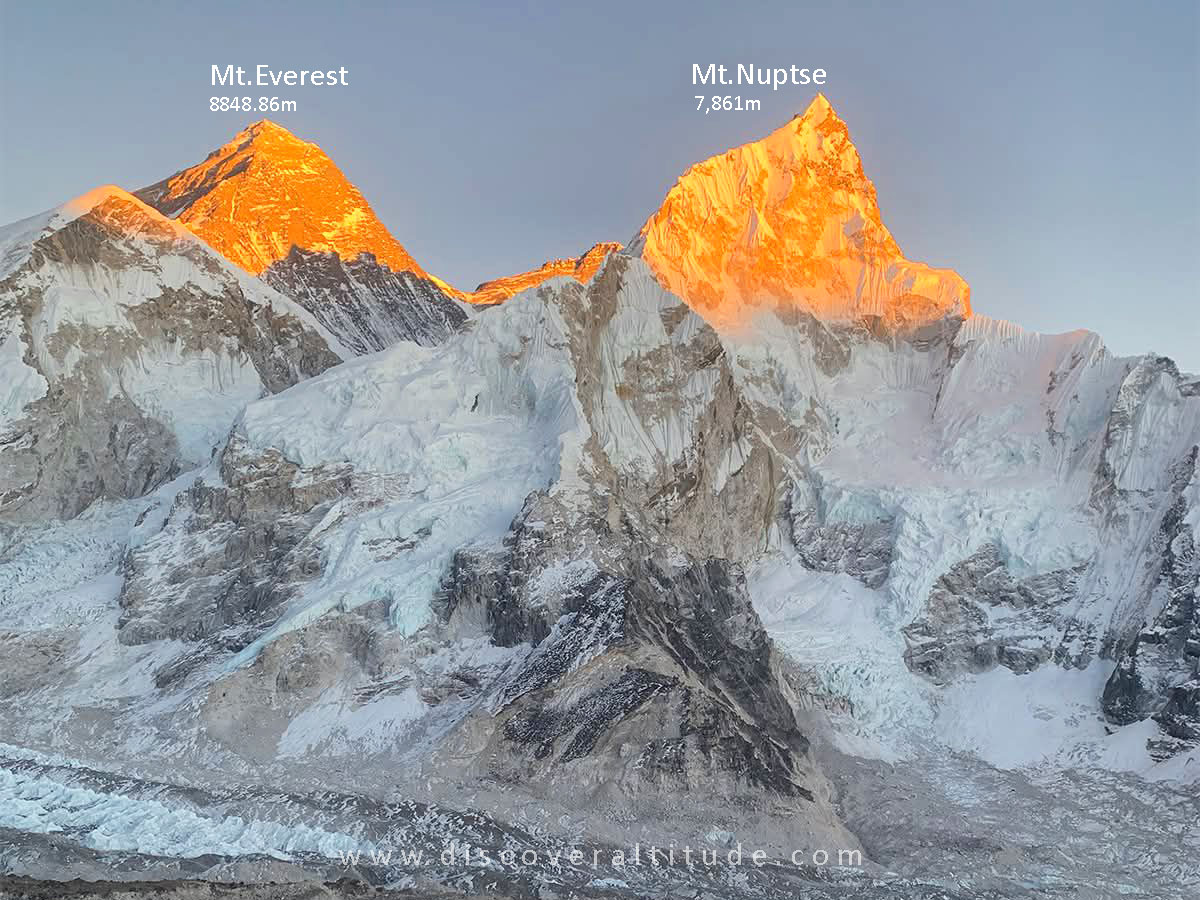
If you are looking for a comfortable and high success rate for Everest Base Camp, this 14-day Itinerary for Everest Base Camp is the perfect one can have. Everest is not a mere trek; it is a trek that starts with a moderate to strenuous hike to the Base of Everest, taking you to an altitude of over 5000+ meters.
For this, acclimatisation from the very beginning is one of the perfect ways to gain success. The 14-day Everest Base Camp Trek is a classic route with a two-way drive in/out from/to Kathmandu. This helps one to acclimatise from DAY 1 itself.
This will be a scenic countryside drive exploring the real Nepal. Further, the best part of the Everest Base Camp Trek via road helps travellers to skip the unwanted flight cancellation to/from Lukla, which frequently happens. Thus, the best option that provides an unnecessary delay or a troublesome trek to Everest Base Camp is to follow the Road Drive option.
Frequently, for weeks or sometimes more, the Lukla flight randomly gets cancelled due to poor weather conditions and poor visibility, and trekkers get stuck at the airport. As a result, the entire itinerary gets affected, and further, sometimes the International flight gets missed due to flight cancellation from Lukla. Hence, the road drive is the best way to avoid all these possible challenges during the Everest Base Camp Trek.
The entire success for Everest Base Camp Trek requires stamina and acclimatisation because one will be trekking to the high altitude above 5000+ meters, and this altitude gain results in a thinner layer of oxygen. Thus, to make a high altitude trek a success, one has to make sure acclimatisation is a must during the trek, and this plays a vital role, and also the distance between the camps is well balanced with the altitude.
Everest Base Camp Trek in 14 Days Itinerary: Drive in & Drive Out
Day 1: Drive from Kathmandu to Salleri ( Guide will be travelling together, he/she will assist you in the best way)
Day 2: Drive to Surke (2,290m) and Trek to Phakding (2,610m)
Day 3: Trek to Namche Bazaar (3,446m)
Day 4: Acclimatisation Day, Day Tour around Everest View Hotel (3,880m)
Day 5: Trek to Tengbuche (3,860m)
Day 6: Trek to Dingbuche (4,410m)
Day 7: Acclimatisation Day, Day Tour around Nangkar Tshang Hill(5,000m)
Day 8: Trek to Lobuche (4,910m)
Day 9: Trek to Gorakshep (5,140m) and Day Tour around Everest Base Camp (5,364m)
Day 10: Morning Hike to Kalapatthar(5,545m) and Descend to Pheriche (4,240m)
Day 11: Trek to Namche Bazaar (3,446m)
Day 12: Trek to Surke (2,290m)
Day 13: Drive to Salleri
Day 14: Drive to Kathmandu (1,350m)
Cost Information
What's included?
- Complementary International airport pick-up and drop-off
- Private transport to the Jeep Station
- Kathmandu - Shalleri sharing Jeep (Two Way)
- Shaleri - Surke Sharing Jeep (Two Way)
- Professional English Speaking Guide from Kathmandu
- Trek allowance for the Guide
- Sagarmatha National Park Permits
- Pasanng Lhamnu Permits
- TIMS Permits
- Tea houses' accommodation in the mountain on a Twin-Sharing Basis
- Trekking Pole during the trek
- Duffle bag during the trek (if you take a Porter)
- First aid medical kit
- Oxi Meter to check your pulse rate
- Water Purification tablet
- Trip achievement certificate
- Government Tax and Service Charges
What's not included?
- Travel Insurance
- Hotel in Kathmandu
- Meals during the Trek
- Porter to carry your backpack (2 Trekkers: 1 Porter)
- Personal Expenses (Internet, Hot Shower, Hot/Cold Drinks, Dessert, Laundry, Charging, etc)
- Tips for your guide
Inquiry us | Instant Booking | Connect on WhatsApp
Note: For booking confirmation, we need a copy of your passport and a $100 advance payment.

Trekking to the Everest Base Camp in 2 weeks via road drive: Salleri to Everest Base Camp
Classic 14-day Everest Base Camp Trek with road drive is one of the best options for travellers to enjoy their trip to Nepal and accomplish the majestic trek to the base of the highest mountain in the world.
This will be a relaxing way to conquer the Himalayas in just two weeks of time, with acclimatisation at high altitude. Here, the entire trip to Everest Base Camp will be completed in just 2 weeks via a road. However, to make sure the program goes in a perfect way, these 2 weeks Everest Base Camp Trek will be a road drive to/from Kathmandu to the starting point of the trek, and the same way back.
This will be a Classic route to Everest Base Camp via the countryside, exploring the nature and villages, and skipping the unwanted flight option. Further, the trek will go via slow acclimatisation at the lower altitude and full 2 days of acclimatisation at the higher altitude. This will allow hikers to explore the surrounding views and the villages, and further help their bodies cope with the surrounding environment.
This drive will start from Kathmandu in a Jeep to SALLERI and then to SURKE to the starting point of the TREK, and continues descending the same way. However, if trekkers want to follow the one-way FLIGHT option, that too will be possible.
Highlights of the 14-day classic Everest Base Camp Trek
Classic Everest Base Camp Trek 14 days is one of the prominent trekking packages that focuses on a maximum success rate with its distinct itinerary. The program includes the road drive option to follow the Everest Trek route.
Moreover, the itinerary during the Everest Base Camp follows the regular and easy-going day-to-day overnight camp, maintaining the distance and the altitude again. This provides flexibility and also covers all the majestic features that fall within the Everest Base Camp Trail.
The program of the Everest Base Camp Trek 14 days covers 2 nights of acclimatisation during the hike and the additional hike on that particular day to Everest View Hotel and Nangkar Tshang hills to help your body get acclimate during the high altitude route.
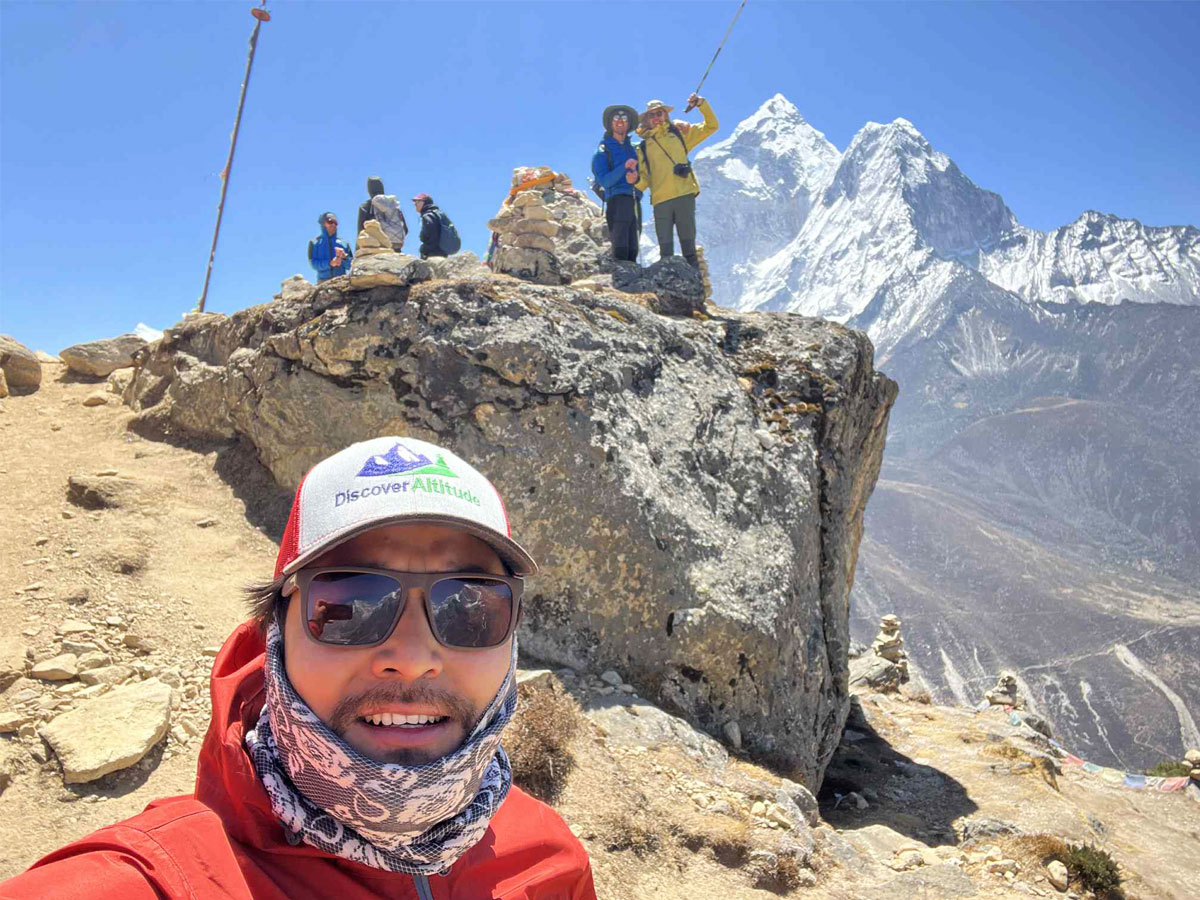
Trekkers will be able to explore the panoramic view of the Himalayas and the biodiversity of nature. The trail to Everest is blessed with distinct Sherpa culture and customs, and one will be able to explore the Sherpa Capital, Namche Bazaar, and visit the local markets.
During the trek, you will encounter different monasteries and chortens and the Tengbuche Monastery, which shouldn’t be missed. The trail follows with the Sherpa Museum in Namche Bazaar and the Khumjung Monastery with the preserved head of YETI, a popular mystery man of the Himalayas.
Above all, the 2-week-long Everest Base Camp Trek follows the classic trail via the road drive from Kathmandu to the starting point of the trek.
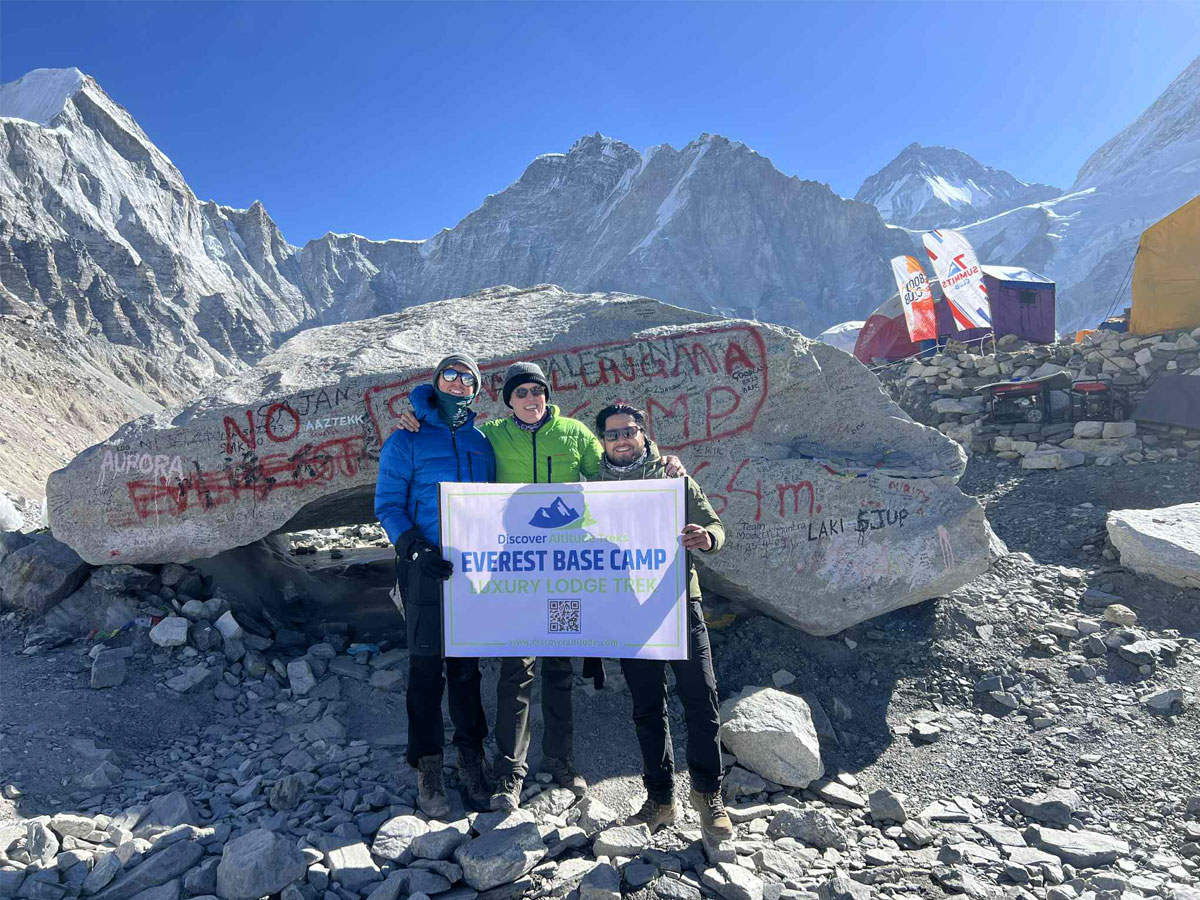
Why the Classic 14 Days Everest Base Camp Trek via road drive is a perfect Itinerary:
Uncertainty of the Lukla flight
Lukla is the shortest gateway to the Everest Base Camp Trail and the entire Everest Region Trail. This flight route minimises an additional 3-4 Days of off-road drive to reach Lukla.
Every day, early in the morning, after 6 AM, a couple of small planes head towards Lukla and back from Kathmandu. However, during Spring and Autumn, which is regarded as the busiest travel season in Nepal. The flight to/from LUKLA (Both ways) are diverted towards Manthali/Ramechap airport, which is 4/5 hours drive.
Those months include October-November and March-April. However, dates and months might change depending upon the decision by the government of Nepal and the Ministry of Aviation and notify us a month before any changes.
Further, the flight to/from Lukla always remains uncertain due to the weather conditions of the mountain and poor visibility and frequently gets cancelled.
Here, if you are planning for the Everest Base Camp Trek within those time frames. Please be prepared to drive to Manthali Airport at midnight 1 AM to reach Manthali at 6 AM.
Thus, to avoid all these troublesome flight options, it is best to follow the classic route to Everest Base Camp, the safest with acclimatisation to achieve success.
Visit the Everest region and learn about the Sherpa
Everest Base Camp Trek in 14 days will not be a mere hike; it is a journey to explore the best of nature and the typical culture of the Sherpa community, an ethnic group that resides and has the ability to adjust to the high altitude.
Everest Region is also known as the homeland of the Sherpa community, and Namche Bazaar is the capital. Sherpas mainly follow Buddhism as their main religion and are regarded as one of the religious communities preserving their age-old tradition and culture.
They are kind-hearted and helpful, and their hospitality in the mountains will be one of the best experiences for travellers. Tea houses and lodges in the mountains are mainly operated by the Sherpa people as their family business. During the trek, one will be able to visit some of the monasteries and chortens on the trail and explore the daily life and activities of the Sherpa community.
Following the classic road-drive trail of Everest Base Camp benefits trekkers to explore the ethnic community at the lower altitude itself. How they differ from altitude to altitude will be an interesting visualisation.
The Hillary suspension bridge and the Bungee jump
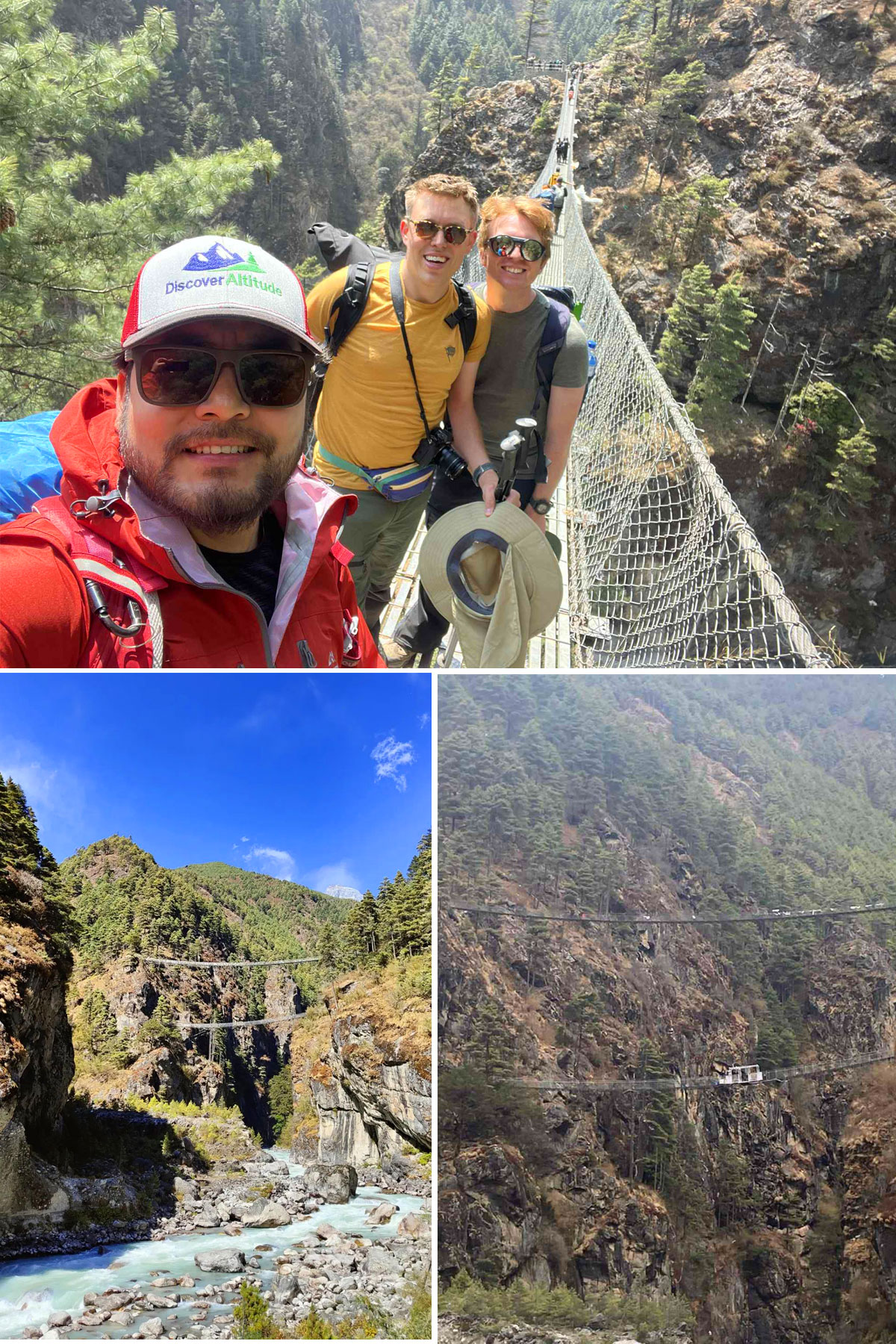
Classic road drive trail to Everest Base Camp Trek meets the main trail route at Chheplung and then follows the regular trail both ways. As the trek accelerates, you will be able to see the Hillary Suspension Bridge over the Dudh Koshi River.
This bridge over the river connects the two hills, minimising the trekking distance to be covered. The best part here for travellers will be to experience Bungee, which is very new, and trekkers can have a wonderful new experience while en route to Everest Base Camp.
Flexible itinerary and pricing option
14-day Classic Everest Base Camp Trek itinerary is a flexible program. Here, we use all the 14 days in the mountain; however, a couple of days will be jeep drive in the countryside. Although the Itinerary mentioned below is tentative, we are flexible to changes as per your requirement, pace, interest, and time frame, and hence can be customised as needed.
Our trekking staff will work accordingly and arrange accommodations as you requested. If travellers want to skip the busy location with crowds, you will get chances to change your location of stay. However, at some point, there won’t be the option of changing mostly at higher altitude due to less population and limited tea houses.
Further, we are flexible with trekkers to choose any of the ways they prefer. If you would like to experience a one-way flight and the other way drive, that too will be possible, in such a case couple of days will be less in the itinerary. Moreover, those days can also be used to add a popular extensional route in the Everest Region.
Tea house and Lodges
During the Classic 14 Days Everest Base Camp Trek, tea houses and lodges run by the local Sherpa community are the only option. Those will be basic but tourist standard with 2 beds in a room with a thick mattress, blanket, and pillows.
Lower altitude will have some attached rooms in the tea house; however, at the higher altitude tea house will be of similar touristic standard with toilet/bathroom outside the room.
However, till Dingbuche, travelers will have a choice to select the Luxury accommodation as well, with additional cost. Those are mainly in lower altitude. Till Dingbuche, one will also have the option of a Hot Shower in all the tea houses.
Extra expenses during the trek
Everest Base Camp classic trek 14-day program includes all the meals during the trek along with accommodation, transportation, permits, etc.
During the trek, your cost covers almost everything; however, personal expenses are not included in the package cost, and travelers can pay for the service as per their needs.
Those personal expenses include: Mineral Water, Hot Shower, Internet, Desserts, Hot/Cold drinks, etc. However, those are exceptional and if one prefers to have those extra services every day, the cost per day may be around USD 10-15 (roughly). Here, we request our travelers to carry Nepali Currency for personal expenses because the cost will be in local currency, and in the mountains,the exchange rate of the foreign currency is comparably low compared to the city.
Extension of the trail
There is a huge option to extend the 14-day Classic Everest Base Camp Trek trails to other parts of the Everest Region. This is one of the most diverse regions in Nepal, and travelers can extend to other popular parts with some additional days in their schedule program.
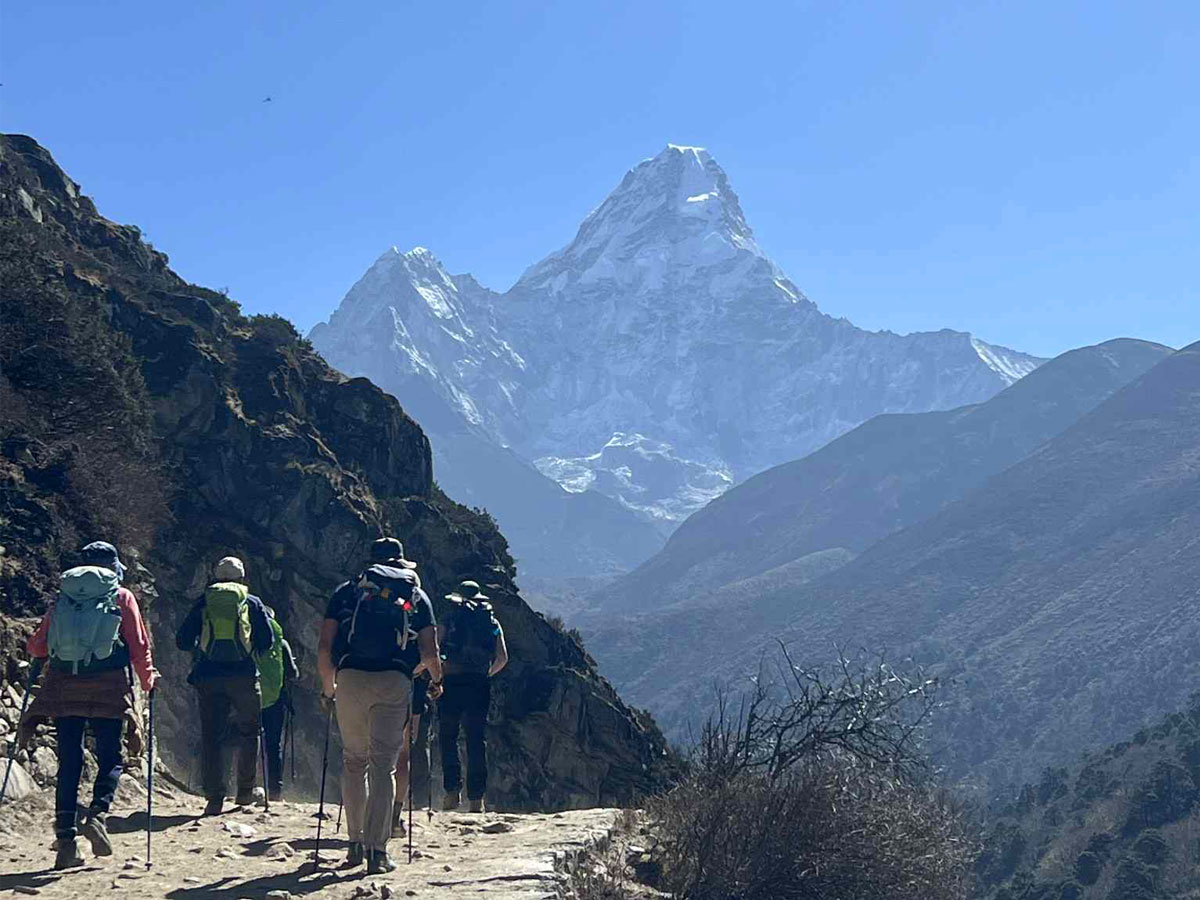
Some of those includes: Ama Dablam Base Camp, Island Peak, Three Pass Trek, Gokyo Lake and Cho La Pass, Kong Ma La Pass, Chhukhung, etc.
Tipping culture
Tipping is not mandatory, but highly expected culture in Nepal. Every guide and porter one uses expects tips at the end of the trip, on the last day. It is a sign of gratitude shown towards the trekking members for their help and support to make the trek a grand success.
To make the trip a success, your trekking staff, such as guide and porter, play a vital role by informing you about the foods, observing your fitness level and monitoring your pulse rate, explaining about the culture and history and the mountain, above all taking care of you in such an area etc. they remain a friend forever and your success counts for them. Thus, tipping is highly recommended and can be collected together in a group and divided among your trekking members.
Attach toilet/bathroom facilities during the 14-day Classic Everest Base Camp Trek
Everest Base Camp Trek is definitely a high-altitude trek and can be categorically divided into two sections (Lower Altitude and High Altitude). At the lower altitude getting attached toilet/bathroom won’t be a problem, unless you have advanced booked them.
However, in the high altitude attach bathroom won’t be possible due to the high altitude and temperature decreasing below 0° Celsius. However, there will be a western toilet just outside your room.
Is this trek fit for me?
14 Days Everest Base Camp Trek program is a classic way to explore not only the Base Camp but the entire Everest Region in one time-frame and is the best for all age group and genders. As the itinerary follows the regular camp with a 2-day acclimatization, it results in a high success rate for any trekkers.
Further, the trek begins with the road-drive itinerary from the lowest altitude, which helps in acclimatization. The program follows the regular classic trail with 5/6 hours of hike every day, maintaining the distance and the altitude gain. This reduces the possible altitude-related sickness and exhaustion due to the long distance to be covered.
Everest Base Camp Trekking in 14 days is a perfect program for beginners and for regular hikers, that skips the Lukla flight and takes a road drive option to explore the real Nepal.
What to expect?
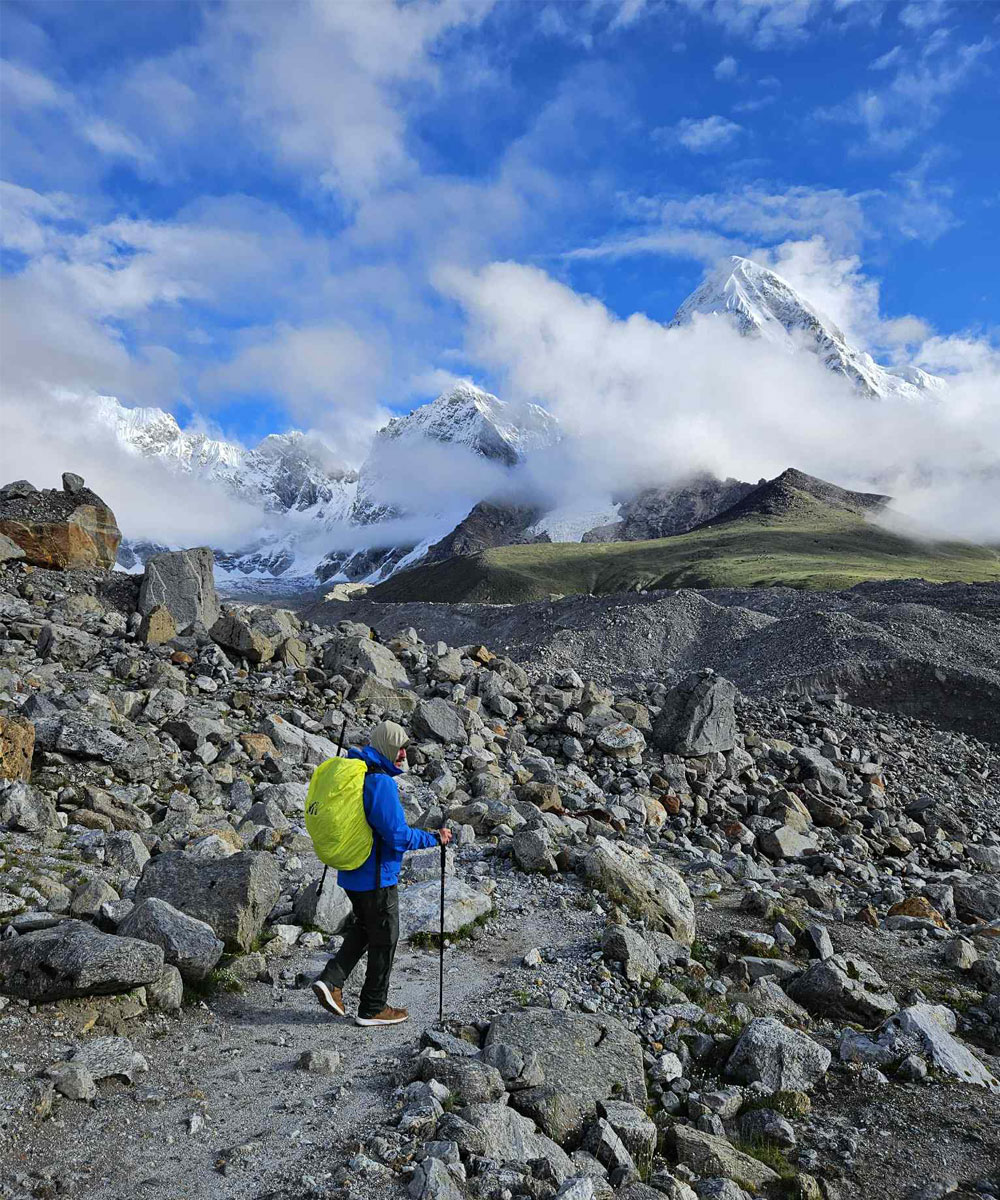
Trekkers can expect a scenic jeep drive in rural Nepal that follows the classic route to Everest Base Camp. You will be accompanied by a professional guide from Kathmandu and a Porter (if required) to carry your backpack from the stop where the trek begins.
The entire trek will be in a pristine environment with the majestic view of the countryside, hills, and the Himalayas. The packages cover almost everything during the trek and for further information, kindly look at the INCLUDED and EXCLUDED parts below the ITINERARY.
How many days are required for the classic Everest Base Camp Trek?
The shortest version of the Everest Base Camp Trek (One Way Trek and the other way by Helicopter) can be of 7 Days. However, if one follows the way trek with regular overnight camp, then the Everest Base Camp Trek is 12 days. Further, if you follow the regular itinerary without acclimatization, then 9 Days can be one option. To conclude, the number of days for the Everest Base Camp Trek will start from 7 Days to as one prefer to.
This is keeping the starting point and ending point in Kathmandu. Additionally, with international arrival and departure, the entire Nepal trip with the Everest Base Camp Trek will be of additional 2 Days.
12-day trek in the Everest region is one of the easiest and comfortable hikes, as the itinerary includes acclimatization of 2 days while ascending. However, the Classic Everest Base Camp Trek will also go in 14 days, skipping the flight to/from Lukla. However, a One-Way flight (if) will deduct 1 day of the trek in the Itinerary.
Trekking to Everest Base Camp is possible throughout the year and is doable in all seasons. However, monsoon is not regarded as the best time for the Everest Trek whether you take the option of Lukla Flight or off-road drive.
LUKLA FLIGHT: If one goes with the option of Lukla flight for the Everest Base Camp Trek during monsoon, then the main issue is the high possibility of flight cancellation due to poor visibility and bad weather.
ROAD DRIVE: If one goes with the option of Road Drive for the Everest Base Camp Trek during the monsoon, then the issue will be of muddy roads in some parts. However, this will be a better option than choosing a flight.
Further, monsoon also increases the risk factor to rainfall during the hike, and frequently clouds cover the scenic Himalayan vista as well, and you might not be able to see the Himalayas clearly.
If one is firm to enjoy their pristine journey to the Everest Base Camp Trek, then skipping the monsoon will be the best option. Further, due to global warming and changes in the pattern of rain, Nepal is experiencing a delay in Monsoon weather and last bit late as well.
Below is the CHART that will help one to understand the best time to choose for the Everest Base Camp Trek:
- Winter and regarded as one of the best times with the weather and clear far-sighted view: December and January
- Great Months for Everest Base Camp Trek: February, March, April, May, October, November
- Average Months for EBC Trek: June and July
- Monsoon: August and September and sometimes till mid-October
- Not a recommended Month: September
FAQ’s for 14-day classic Everest Base Camp Trek
Will I receive international airport pick-up and drop-off Service?
Yes, the 14 Day EBC Trek Package includes your international airport pick-up and drop-off as a complimentary.
Do I receive accommodation in Kathmandu?
No, accommodation in Kathmandu is not included in the above cost. However, we can arrange with additional charges.
Does the cost include meals during the trek?
Yes, the cost covers three times meals (Breakfast with a cup of Tea/Coffee, Lunch, and Dinner) and accommodation during the trek.
Is a guide and porter included in the cost?
Yes, a professional guide and a porter (2 Trekkers:1 Porter) are included during your 14 Days Classic Everest Base Camp program.
Do I need to carry some cash for the trek?
Carrying cash during the trek is highly recommended for personal expenses, such as Mineral Water, Internet, Hot/Cold drinks, Hot Shower, souvenir etc. However, those can also be used as a tip for your guide and porter.
How much do I need to carry?
Cash in the mountain is mainly used for personal expenses, and this may vary according to your interests. However, on an average USD 10-15 per day basis will be enough for the trek.
What is the weight limit for a porter to carry?
A porter will carry 18-20 Kg in total during the trek. However, one porter will be in a ratio of 2 travelers.
Do I need to have my day bag?
Yes, a day bag is highly recommended for the 14-Day Everest Base Camp Program. You will use a day bag to carry your very personal belongings such as cash, passport, mobile, camera, water bottle, etc.
How are the lodges/tea houses in the mountain?
Lodges and tea houses during the trek will be tourist standard with 2 separate beds in each room with a tick mattress, blanket, and pillow.
What is the food like in the mountains?
Every tea houses and lodges in the mountain have its own restaurant within. Foods will be of multiple options and one can choose from the menu, which includes local, Nepali, Indian, continental, Chinese, Italian, etc
Is drinking tap water safe during the trek?
Drinking tap water for foreigners is not suggested; however, for water you can use water purification tablets/liquid or have a filter, if you want to avoid Mineral water.